Journal / Spaces Architects@ka
The Courtyard: Rediscovering the Lost Core of the Indian Home
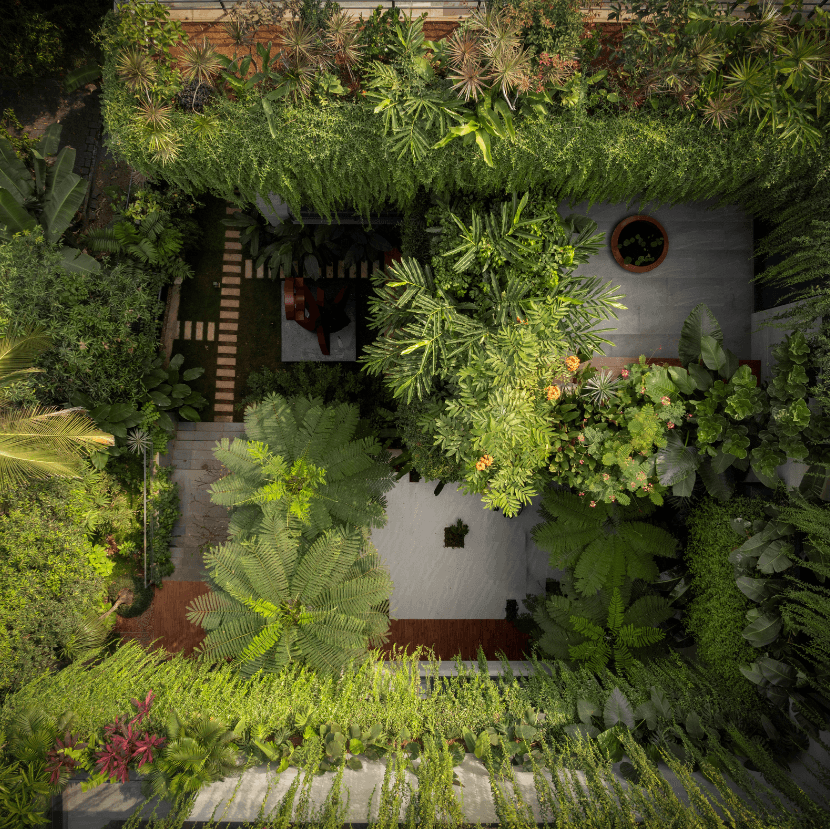
The courtyard was once one of the defining elements of the Indian house. It brought light, air, vegetation and family life into the centre of the home.
As urban living changed, the courtyard gradually disappeared from many contemporary houses. In its place came more enclosed rooms, mechanical conditioning and increasingly externalised notions of nature.
Yet the courtyard remains remarkably relevant.
It is not simply an open-to-sky space. It is a device for organising relationships. Rooms can face it, circulation can pass around it, family members can occupy it at different times, and the changing sky can become part of everyday life.
The courtyard also creates a subtle connection between privacy and openness. It can be protected from the outside while remaining visually and physically connected to the interior.
In contemporary Indian architecture, I believe the courtyard deserves to be reconsidered—not as a nostalgic reference, but as a climate-responsive and socially meaningful spatial idea.
Many of the principles that made the traditional courtyard successful remain relevant today: shade, ventilation, filtered light, vegetation, privacy and community.
Perhaps the courtyard is not a lost idea after all. Perhaps it is an idea waiting to be rediscovered.