Journal / Spaces Architects@ka
Golden Haveli: Restoring the Memory of Chandni Chowk
Historic buildings often carry stories that are invisible beneath layers of alteration, neglect and time. Restoring a haveli means trying to uncover those stories without freezing the building in the past.
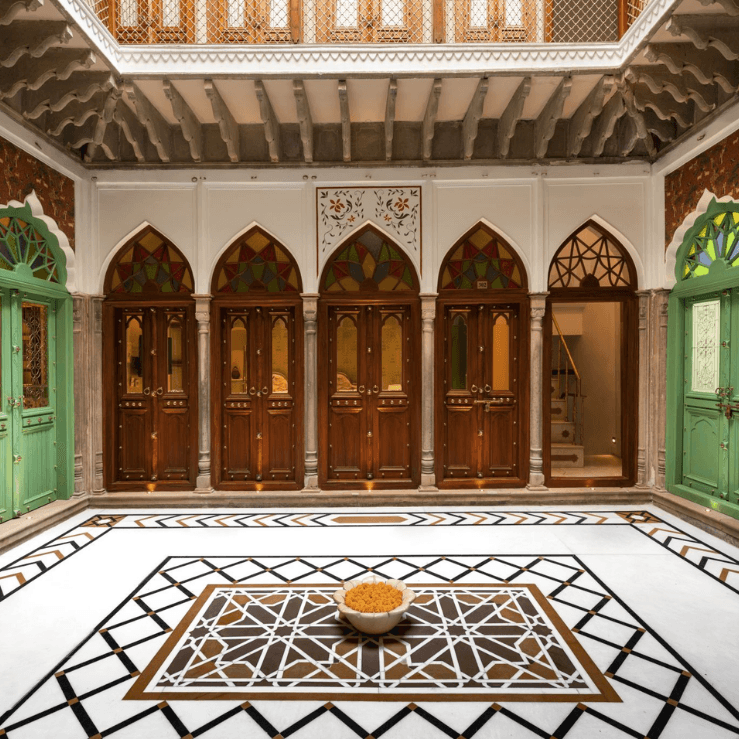
Golden Haveli became an exercise in this balance. Its architectural character needed to be understood before deciding what should be repaired, retained, reconstructed or introduced anew.
The restoration process was therefore guided by respect for the existing building. Traditional proportions and details provided the language, while contemporary requirements determined how the building could function again.
One of the most important lessons from heritage work is that authenticity is not achieved by making everything look old. Authenticity comes from understanding why a building was made the way it was and allowing that logic to inform its restoration.
Craftsmanship becomes critical here. Hand-finished details, traditional materials and the accumulated imperfections of an old building contribute to its identity in ways that cannot be reproduced by standardised construction.
Golden Haveli reinforced my belief that conservation is an act of continuity. We are not simply saving an object from the past. We are giving a piece of architectural memory another chapter.
That is ultimately what makes restoration meaningful: the old building is allowed to remain itself while becoming relevant to a new generation.